

Stewardship Areas Program
The heart of Blue Ridge PRISM is the Stewardship Areas program. Stewardship Areas are simply neighbors working together to manage invasive plants. The cooperation between neighbors creates islands of invasive-free land that reduces the risk of reinfestation. As more neighbors join the effort, the amount of invasive-free land expands, and the health of the our natural areas and wildlife habitat improves.
PRISM partners with communities to create Stewardship Areas. Each partner agrees to provide the following support:
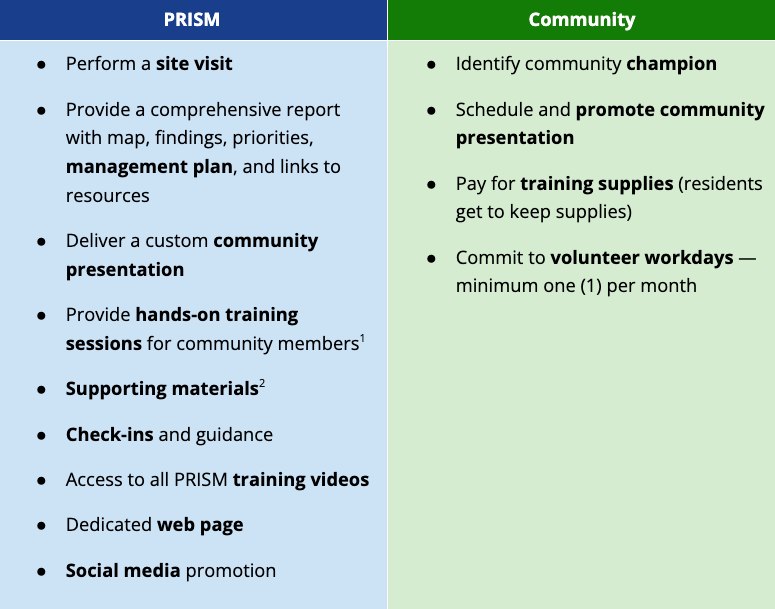
1 Training:
Four seasonal training sessions over the course of one (1) year, with each session also including hand-pulling:
One (1) training per herbicide method, focused on 1-2 species at a time
Cut stump
Hack & squirt
Basal bark
Foliar spray
Hands-on with community members participating
Live herbicide
Includes how to mix chemicals and fill equipment
2 Supporting materials:
Budget estimate for training supplies
Supplies and tools shopping list and links
One (1) page document for each herbicide with image of label and QR code to full herbicide label
Community signage templates
Workday progress tracking template
Stewardship Areas can be a group of farms, a small community, or simply neighbors working together in your homeowners association. If you would like to learn more about how to get started, please contact us.
Duke Hollow Stewardship Area

The goal of the Duke Hollow (DH) PRISM site (Clarke County) is to create a demonstration project showing that a few people can manage invasive plants on a scale of several hundred acres. The commitment of the landowners to continue monitoring the forest and avoid weed resurgence has been crucial to the success of the project. Positive feedback from witnessing the forest become an inviting place to walk again has been a major incentive driving the work forward.
Dutch Creek Stewardship Area

The core landowners in the Dutch Creek Area Stewardship in Nelson County own approximately 1,275 acres of contiguous, mostly forested land in a scenic, mountainous area of Virginia that has intrinsic natural resource value. The stewardship area itself is further protected by being encompassed within the 3,000-acre Dutch Creek Agricultural-Forestal District (DCAFD).
Forest Lakes Stewardship Area
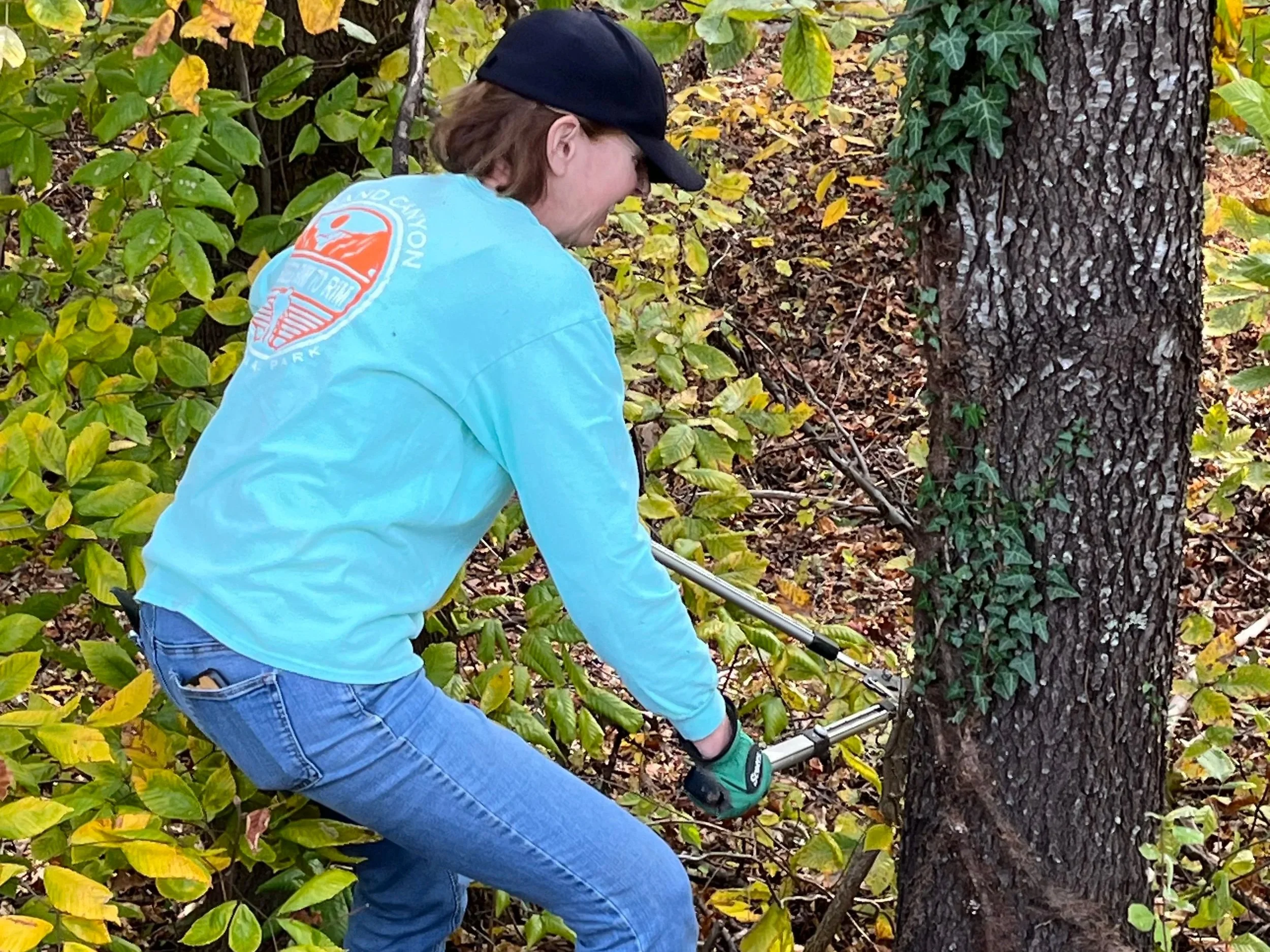
Organized efforts to control invasive plants within the Forest Lakes community in Albemarle County began in January 2025. That’s when long-time resident John Oliver solicited volunteers (via the community’s newsletter) to join him in managing invasives. John became interested in invasives a few years earlier when he noticed the spread of Autumn Olive plants and the proliferation of vines threatening trees throughout the area.
Glenmore Stewardship Area

Glenmore’s stewardship story began in the summer of 2023 when Liza Moorman invited a trainer from Blue Ridge PRISM to meet with her and several interested residents at her home in the community. They wanted to learn more about how to properly manage the invasive species that were marring the beauty of their common wooded areas. Thus began the Glenmore Invasive Warriors, an all-volunteer group of residents.
Mill Creek Stewardship Area
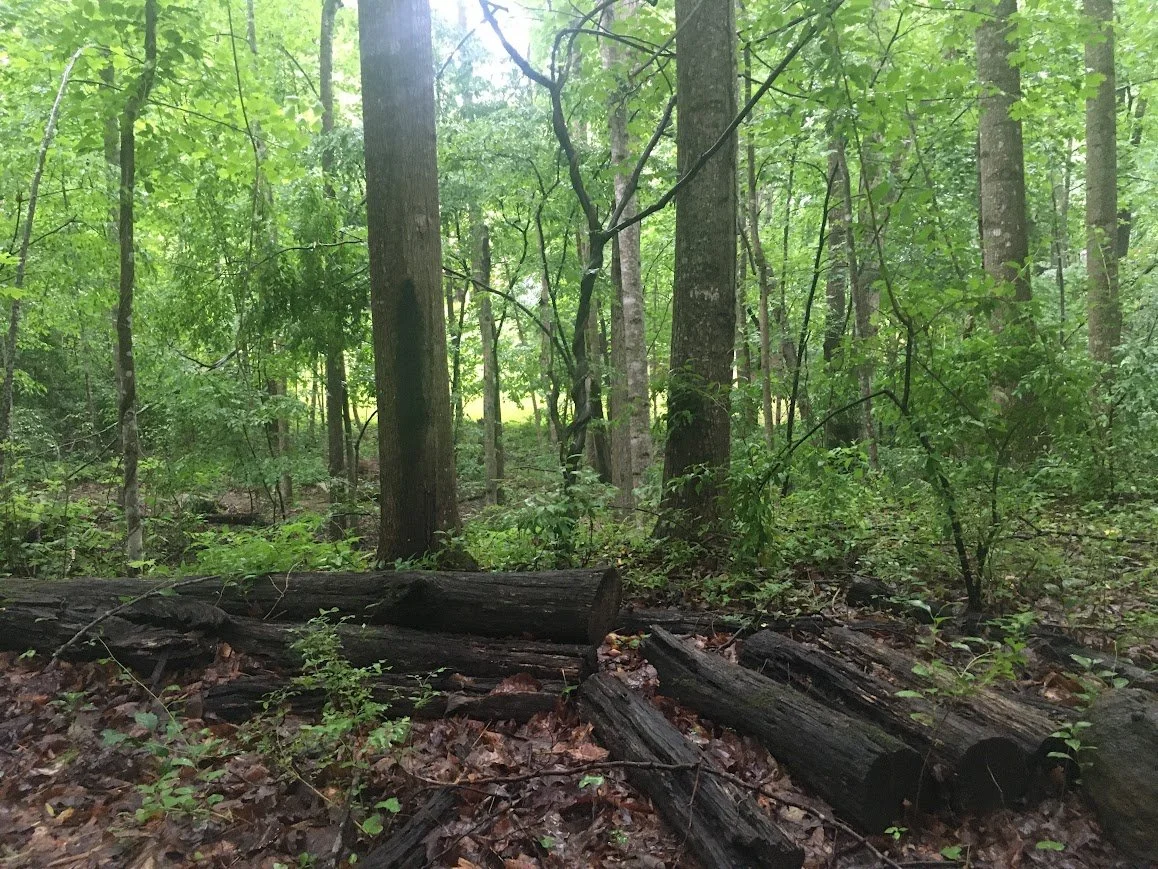
The volunteer stewardship initiative at Mill Creek South grew out of a shared, long-term commitment to protect our community’s extensive common wooded boundaries, pocket parks, and vital riparian buffers. Nestled within an active residential neighborhood in Albemarle County, our common lands serve as wildlife corridors and natural places for residents. Long before we formalized our community efforts, individual neighbors were working quietly on their own patches of common land.
Snow Mountain Stewardship Area

Snow Mountain is in Greene County Virginia and removing invasives involved neighbors working alongside each other. It remains an ongoing task to manage the 600 acres.
