
Mill Creek Stewardship Area
The volunteer stewardship initiative at Mill Creek South grew out of a shared, long-term commitment to protect our community’s extensive common wooded boundaries, pocket parks, and vital riparian buffers. Nestled within an active residential neighborhood in Albemarle County, our common lands serve as wildlife corridors and natural places for residents.
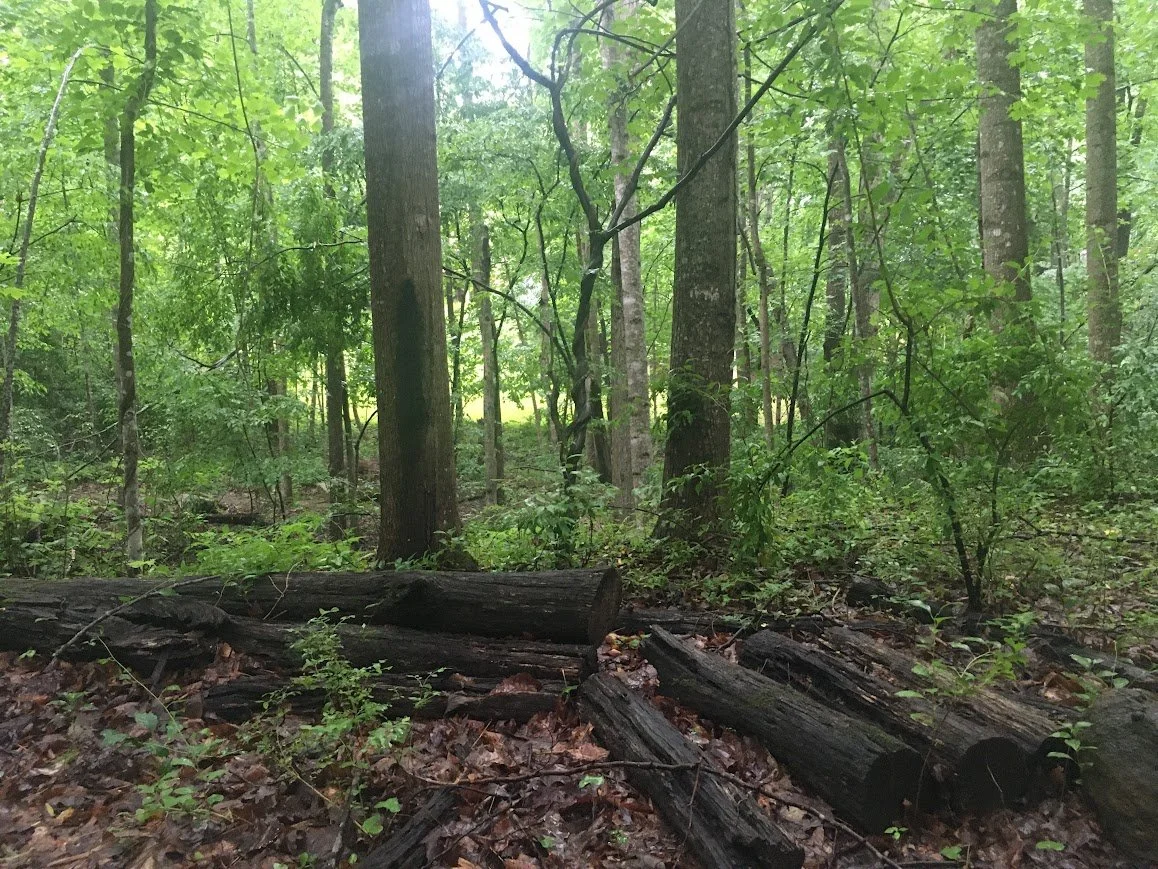
Stoney Creek Woods the way it should be, summer 2023.
History
Long before we formalized our community efforts, individual neighbors were working quietly on their own patches of common land. For years, individual residents made a quiet difference; for instance, my wife and I spent an entire year systematically cutting and removing devastating Oriental bittersweet vines that were actively killing hundreds of mature canopy trees in the Stoney Creek Woods. Today, those tree canopies are clear.
Recognizing that collective action could scale up these individual victories, we officially launched our neighborhood Green Committee volunteer work parties in the summer of 2024 with a major invasive cleanup day at our neighborhood park. We made a noticeable dent, pulling stiltgrass, cutting back honeysuckle, and tackling dozens of autumn olive bushes and bittersweet vines, but we quickly realized we had only scratched the surface. The sheer magnitude of the overgrowth can easily feel overwhelming.
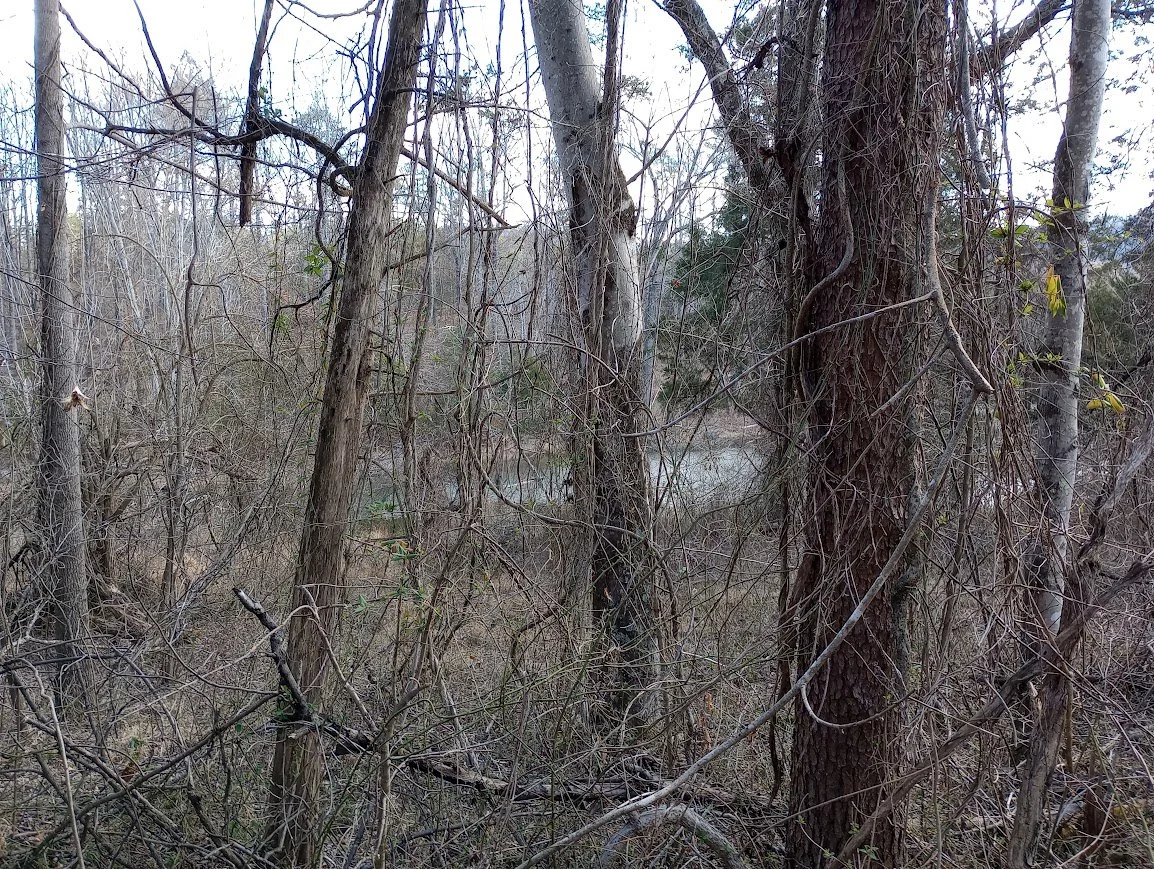
Stoney Creek Woods before the work began, winter 2021.
An Ecological Challenge
That is when we adopted our core project philosophy: “Persistence is the key to success!” To reclaim open spaces from aggressive weeds, you simply have to be more tenacious than the weeds themselves. It requires a multi-year commitment. You can’t get disillusioned when a site doesn't look completely transformed after year one (or even worse than when you started!). You just have to show up, and keep coming back.
The Landscape & Core Threats
Our neighborhood common spaces (The MCS pond/playground wooded area, and the Stoney Creek Woods) feature tall tree canopies, evolving understories, and various riparian edges along the streams and our retention pond, as well as along our various trail systems. However, these wooded fragments are under constant assault from aggressive, non-native species. Our active triage and management strategies primarily target:
Autumn Olive, multiflora rose and porcelain berry, which quickly dominate and choke out the forest understory.
Oriental Bittersweet, honeysuckle and multiflora rose, which compromise mature canopy trees and create massive weed matts that encumber whole sections of the woods (especially along edges).
Japanese Stiltgrass everywhere, understory, in the open, along all edges.
And Bradford Pear saplings popping up aggressively in all of the common areas.
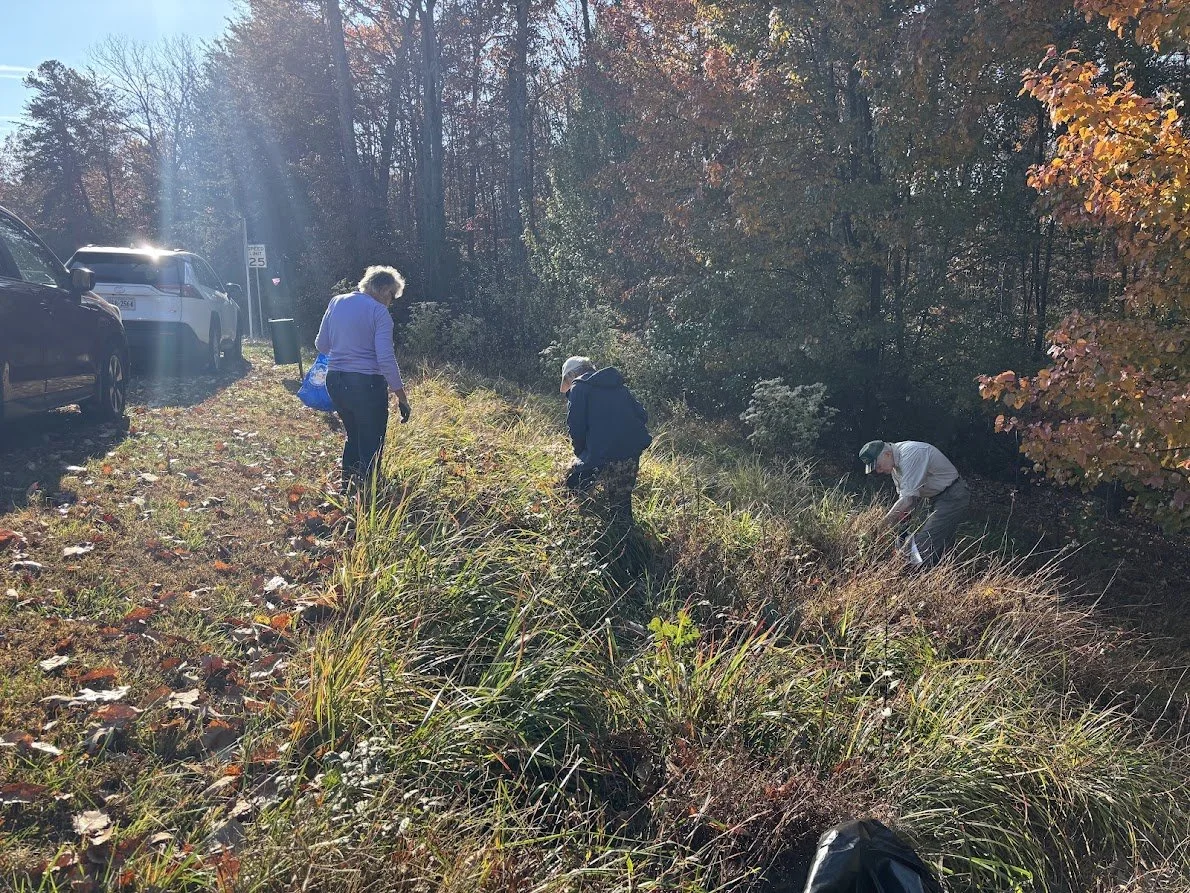
Check out the crew in action clearing brush and opening up trail corridors,.
Taking Control
Following our summer 2024 launch, we established semi-structured volunteer workdays through the subsequent fall and winter, focusing our efforts heavily on the common areas surrounding the neighborhood pond park and deep within the Stoney Creek Woods.
Community stewardship is rarely a straight line. Neighbors get busy, life happens, and nature plays its part -- we have experienced seasons where persistent rain completely washed out every single scheduled volunteer day all fall, forcing us to miss a season or two. During those gaps, the weeds inevitably try to push back and get ahead of us.
However, the most rewarding lesson of our project happened when we got back on it this year. Beginning in the summer of 2026, we began meeting frequently again, and kicking butt as a crew, we quickly realized that past work is never in vain. The progress remains right there under the stiltgrass and new weedy sprouts. With just a little effort, those previous sites are easily re-cleared. And lo and behold, we are now seeing tons of native wildflowers popping up naturally where it once was a complete monoculture of weeds.
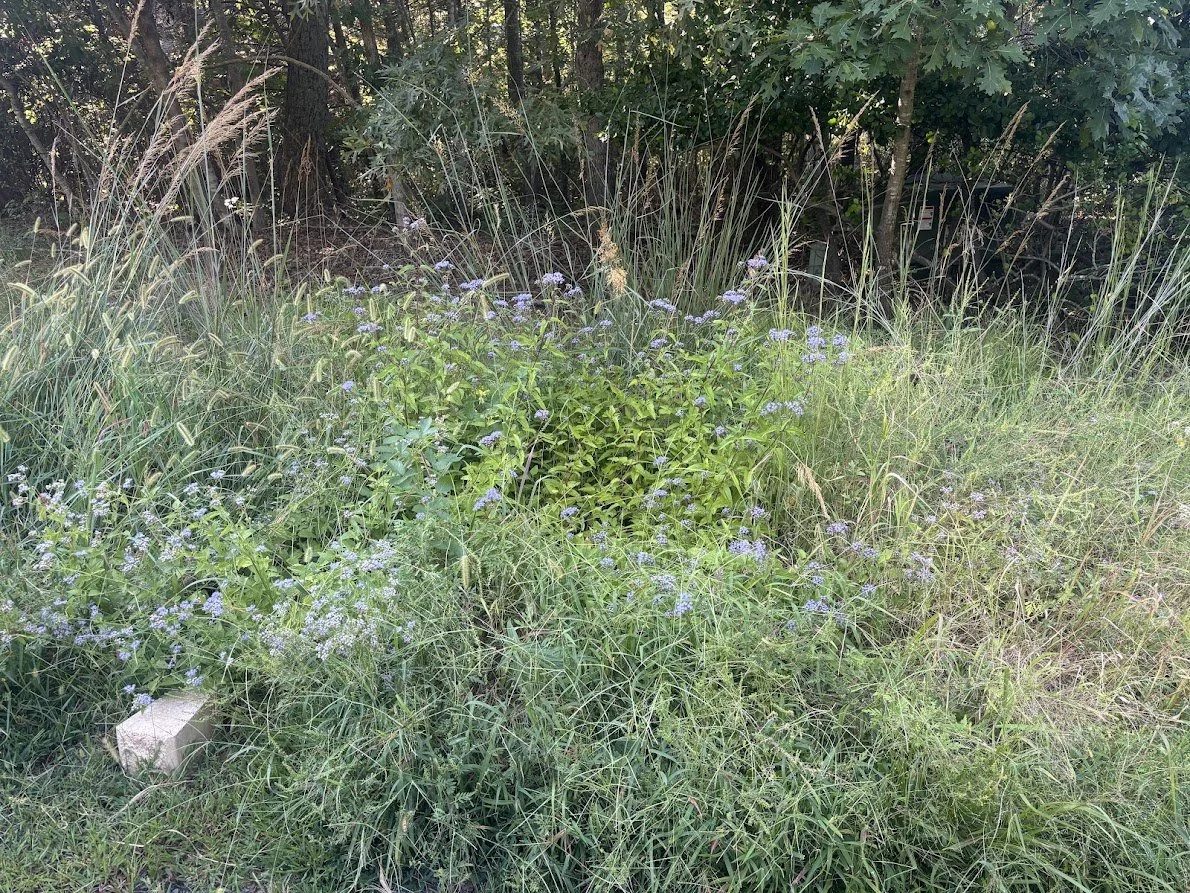
A look at the open spaces where native ecology is taking back the floor.
To manage this large Stewardship area, we divided Glenmore’s common areas into sectors, designating 8 volunteer “sector leaders” who are responsible for monitoring the presence of invasive species within their sectors and coordinating efforts to manage them. Sector leaders, alongside the Team leader, provide education and oversight to other resident volunteers who join the team on group workdays or as part of the smaller sector team.
This group of volunteers has put in at least 472 person-hours of time in this effort, not counting unrecorded individual efforts. Annual operating costs amounted to $2,046 last year, including $1,572 for chemicals and supplies and $564 for consultation. The HOA recognized the importance of eradicating invasives and providing education to residents by providing a separate line item in the annual operating budget.
Additionally, the Glenmore Invasive Warriors created a Glenmore Green Earth Stewardship Initiative to highlight the importance of preserving native habitats through invasive species removal, and by promoting native plants in our backyard landscaping as well as in the common areas. Our speaker series has provided education sessions to residents through lectures-some of which have had over 50 residents present, and our Walk, talk and Learn sessions in the field, which focused on identifying and managing invasive species, and the importance of native plants in our backyards,
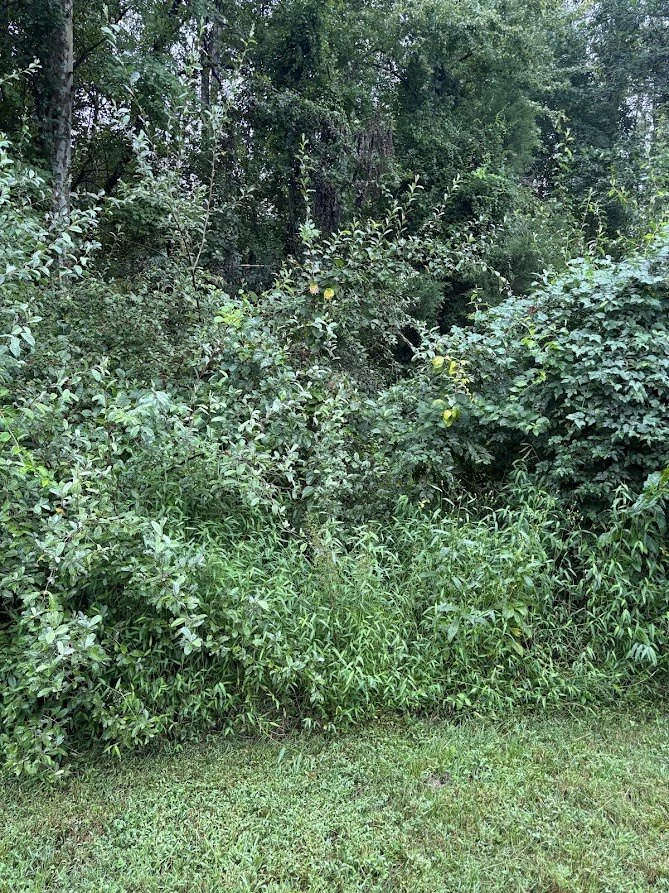
September 2026: entrance to the Pond Trail was overgrown and unusable by residents.
Our core strategies continue to evolve
Reclaiming Public Access & Trail Infrastructure: We are heavily focusing on clearing invasive overgrowth along our old neighborhood trails, specifically the trail leading to the pond. Clearing the brush is just phase one; we are actively shifting into trail infrastructure improvements, building out structural stone steps and planning boardwalks to span the wet areas. This work turns hidden, choked-out spaces into accessible, walkable corridors for the whole neighborhood.
Understory Release: Clearing dense, competitive brush to give native seedbanks the light, space, and air they need to breathe and regenerate naturally.
Continuous Maintenance: Systematically patrolling previously cleared areas to clip new invasive resprouts before they can become re-established.
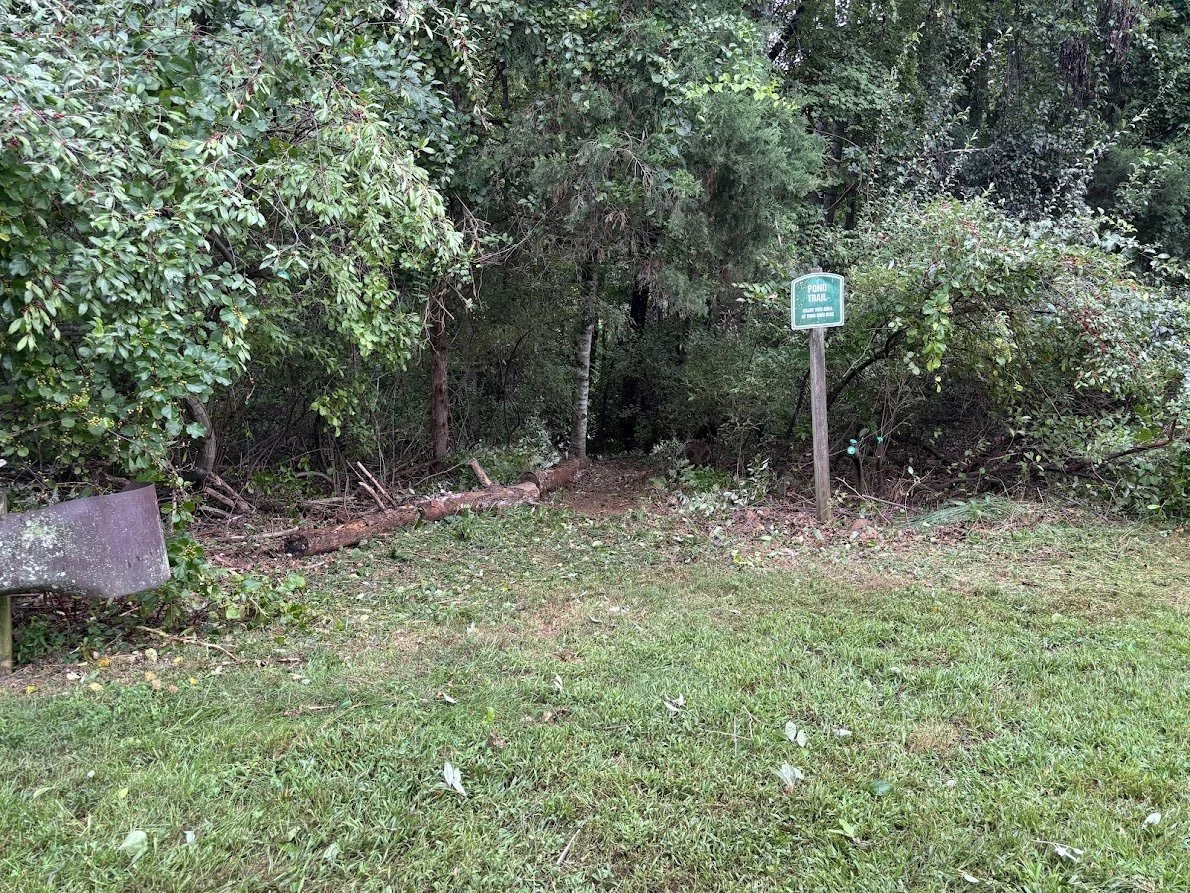
After: now you can find and use the Pond Trail!
September 2026, we decided to take back the Pond trail. Pictures before and after trail work. Once the brush is completely cleared, we will begin rebuilding the trail system, including stone steps, boardwalks over wet areas, native plantings, and birdhouses at the pond.
Looking Forward
By formally registering as a Blue Ridge PRISM Stewardship Area, Mill Creek South is bridging the gap between isolated volunteer cleanups and a permanent, neighborhood-wide committee for a Green Community. We are setting an ambitious schedule for this fall and winter to aggressively expand our various, managed areas. Our goal is to successfully transition our common neighborhood spaces into vibrant and resilient natural habitats. 🌱