
Loudoun County, Virginia—known both as the “Napa Valley of the East” and “Data Center Alley”—is now also home to what is arguably the nation’s largest grassroots invasive-plant removal movement. The Loudoun Invasive Removal Alliance (LIRA), formed in 2023, is a coalition of 86 HOAs and communities representing more than 229,000 residents as of November 2025. LIRA was created to collaborate with local government in addressing the growing impacts of invasive plants on public health, the environment, and the rural economy.
In under two years, LIRA secured unanimous, bipartisan support from the Loudoun County Board of Supervisors to create a $2 million countywide invasive-plant removal grant program—the largest such investment by a local government in the nation to date. How did it come together, and what’s next? A brief overview:
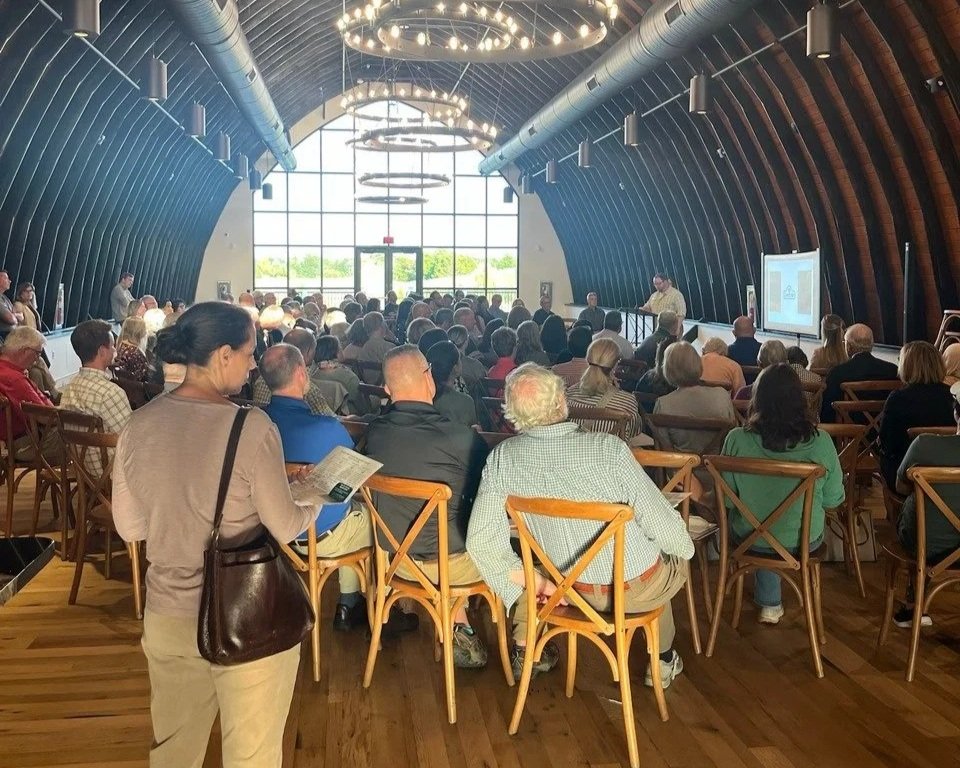
Loudoun Invasive Species Management Program kickoff event, September 2025.
History
LIRA began when leaders of landscaping committees from six Loudoun County HOAs—many of them former or active Loudoun County Master Gardeners—started meeting quarterly to share best practices. By March 2023, each group had reached the same conclusion: all were struggling to keep pace with an invasive-plant problem that seemed to explode overnight, with no designated funding to address it. The idea emerged to approach the County as a unified voice. HOA board members soon voted to form a new alliance—the Loudoun Invasive Removal Alliance—which quickly grew into the largest grassroots movement in Loudoun’s history, ultimately representing more than half of the county’s residents.
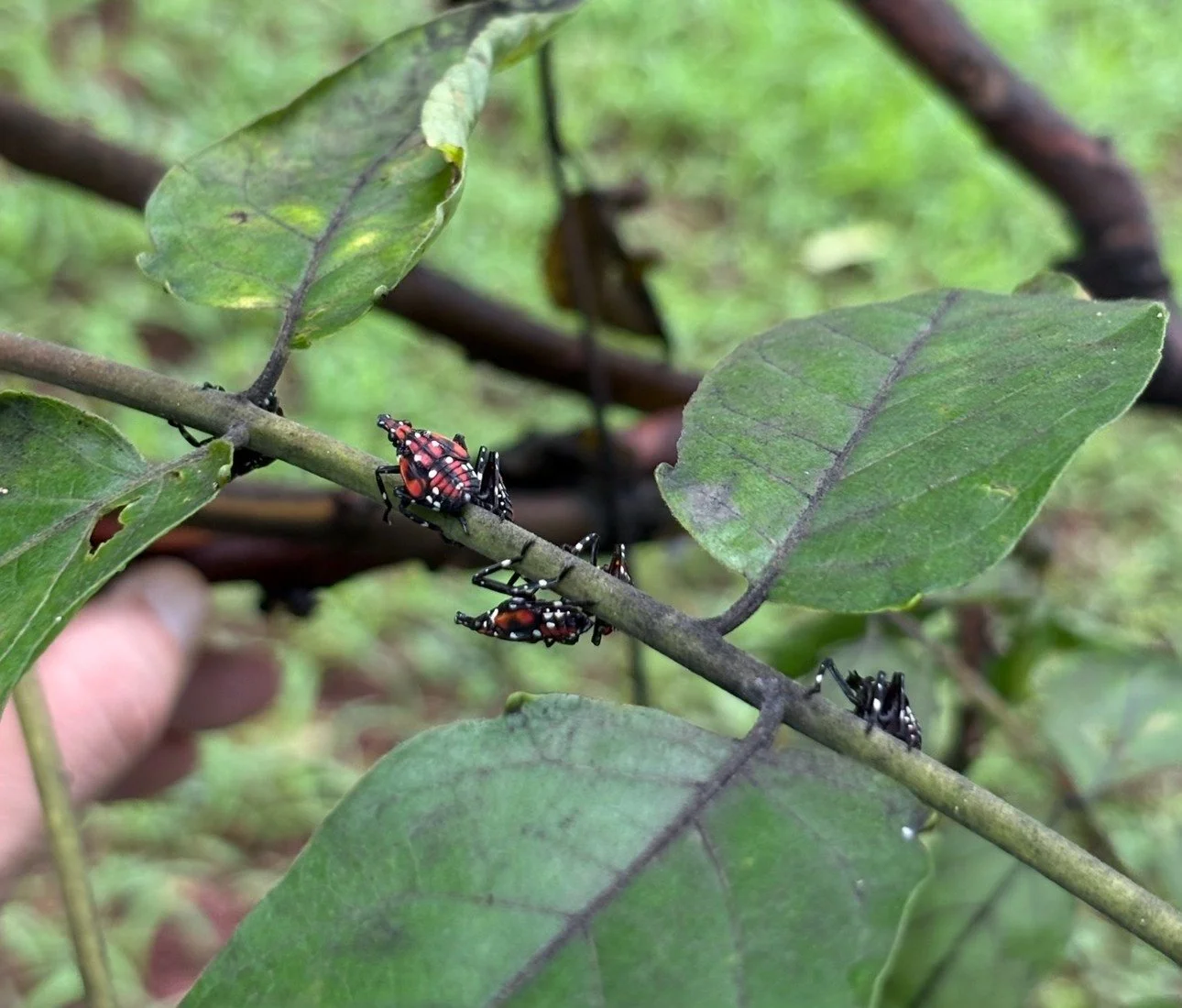
Invasive spotted lanternfly nymphs on invasive tree-of-heaven in a LIRA community.
A Community Challenge
In October 2023, LIRA members—including HOA board presidents, winery owners, farmers, students, and leaders of environmental organizations—addressed the Loudoun County Board of Supervisors (BOS) during a public session for the first time. Nearly 200,000 constituents comprised LIRA at the time. The message resonated. Six weeks later, the BOS unanimously approved $250,000 to explore a county grant program. In September 2024, another $150,000 was unanimously approved to launch a pilot. And in January 2025, the Board unanimously approved $2 million to implement a full countywide program, which officially launched in September 2025.
The grant program awards up to $50,000 per private landowner (HOA, winery, farm, place of worship, individual landowner, etc.) to remove invasive plants from Virginia’s invasive-plant list, re-vegetate the area with native species (as needed), and install signage—all within a three-year plan. In return, grantees commit to increasing public awareness of the project on their property and of invasive plants in general among their residents, members, or congregations. Awareness efforts can include project signage, community communications, volunteer workdays, or educational field trips. Why the emphasis on awareness? Because everyone recognizes there will never be enough funding to eradicate or even significantly mitigate invasive plants countywide. The goal is a paradigm shift in public behavior—residents choosing not to buy invasive plants, removing them from their properties, and even volunteering to remove them elsewhere.
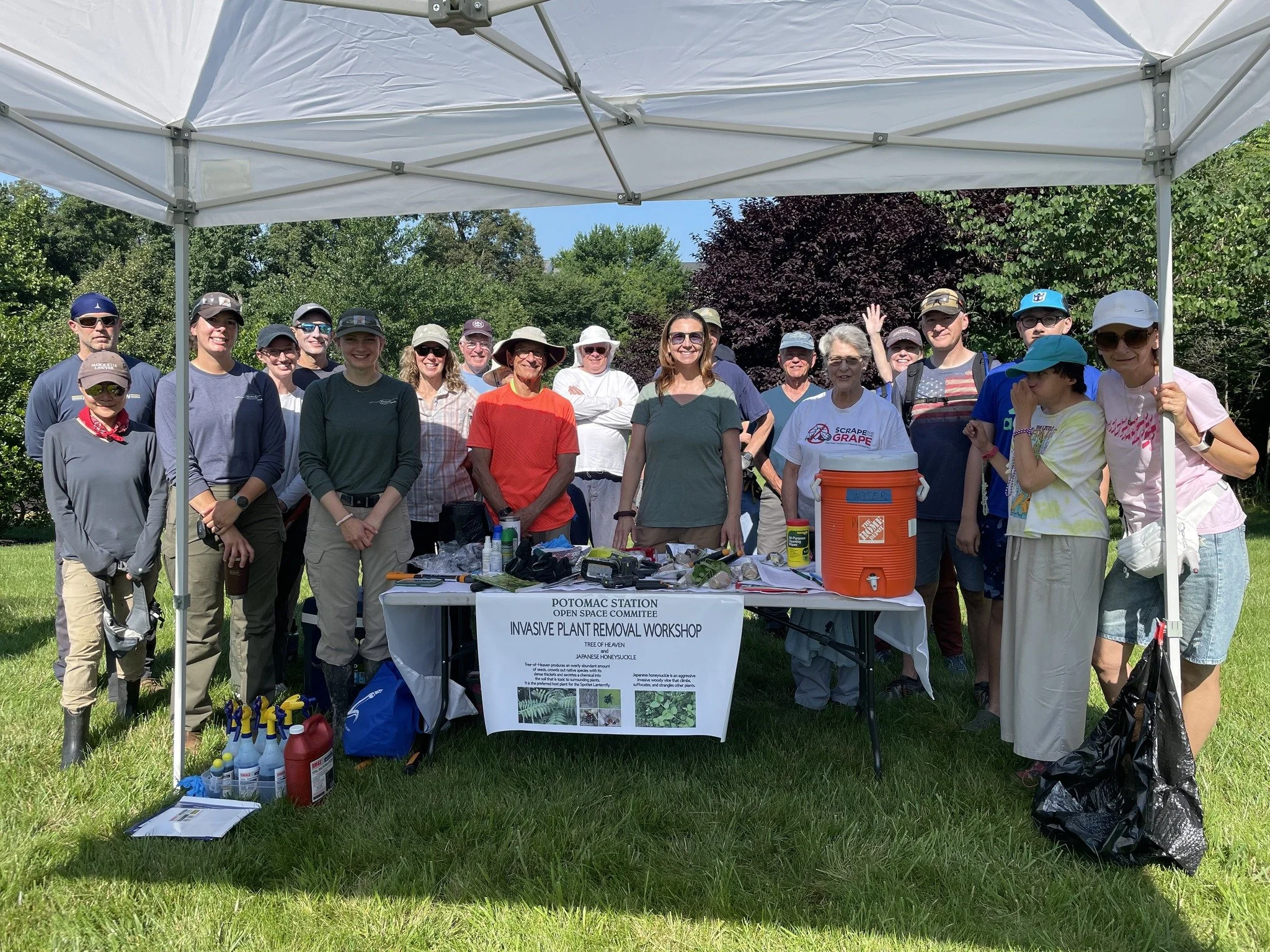
LIRA members training their communities on invasive plant removal.
Public Awareness Initiatives
In addition to the groundbreaking grant program, LIRA has helped lead several other initiatives, including major public-awareness events such as “Scrape for the Grape,” where more than 800 volunteers removed 6.5 million Spotted Lanternfly eggs across 19 sites (including 12 wineries) over three Saturdays in Spring 2024. Other accomplishments include influencing statewide invasive plant policy, contributing to the passage of the County’s bamboo ordinance, and hosting dozens of volunteer invasive removal trainings in partnership with experts—most notably Blue Ridge PRISM.
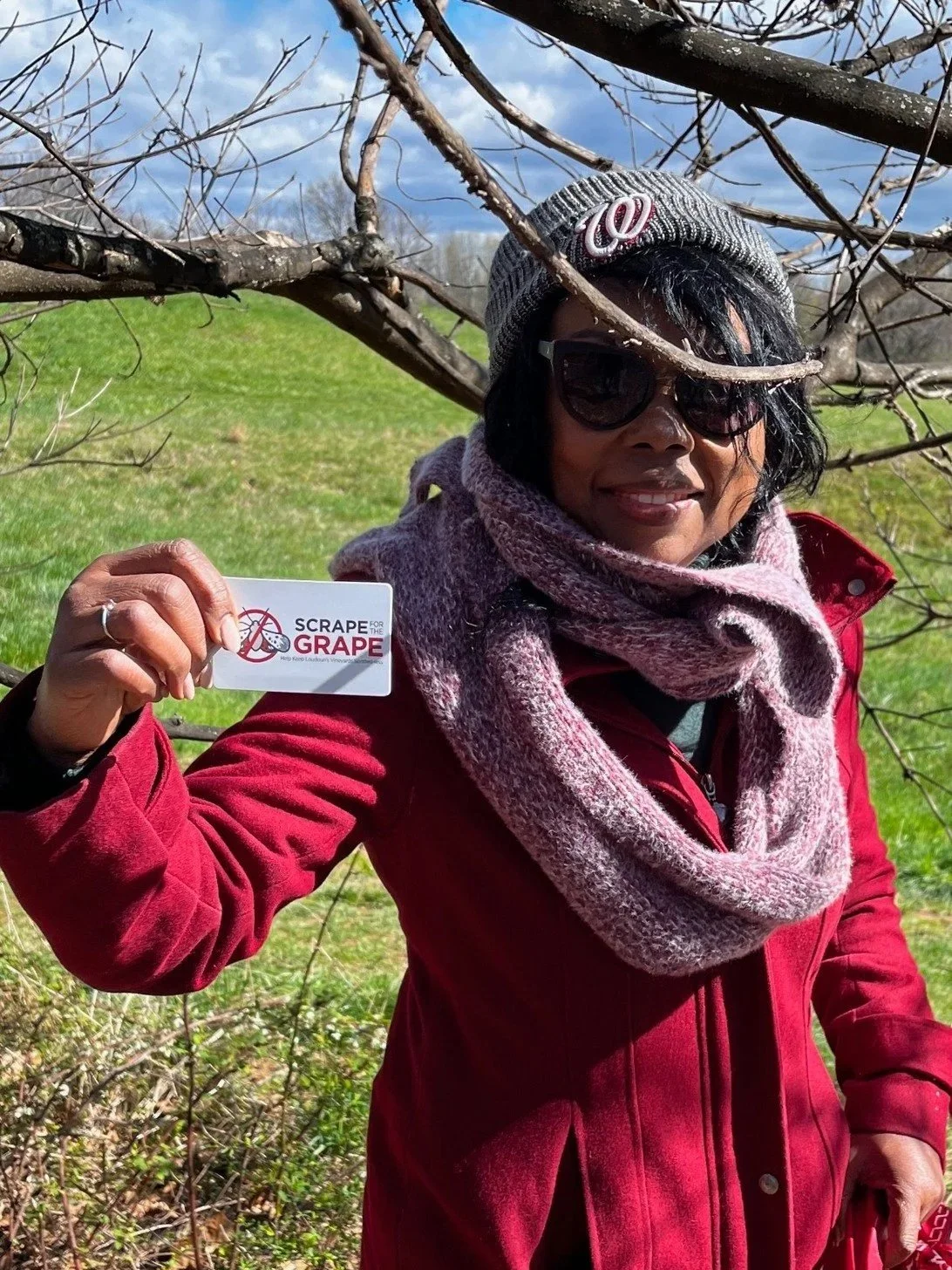
Loudoun County Board of Supervisors Chair Phyllis Randall getting in on the action.
Taking Control
A deep partnership with Blue Ridge PRISM, which took shape in early 2024, was instrumental to LIRA’s success. Among their many contributions, PRISM: (1) led LIRA’s first volunteer invasive removal trainings in June, October, and December 2024; (2) provided strategic written and verbal support at key moments in LIRA’s growth; (3) conducted site assessments for the initial County pilot grants and many more during the full rollout; (4) trained County staff on site-assessment methods; (5) helped mobilize statewide support—including from LIRA—for the game-changing “signage bill” (HB1941/SB1166), which takes effect in January 2027; and (6) now serves on the technical review committee recommending grantees for the County’s program.
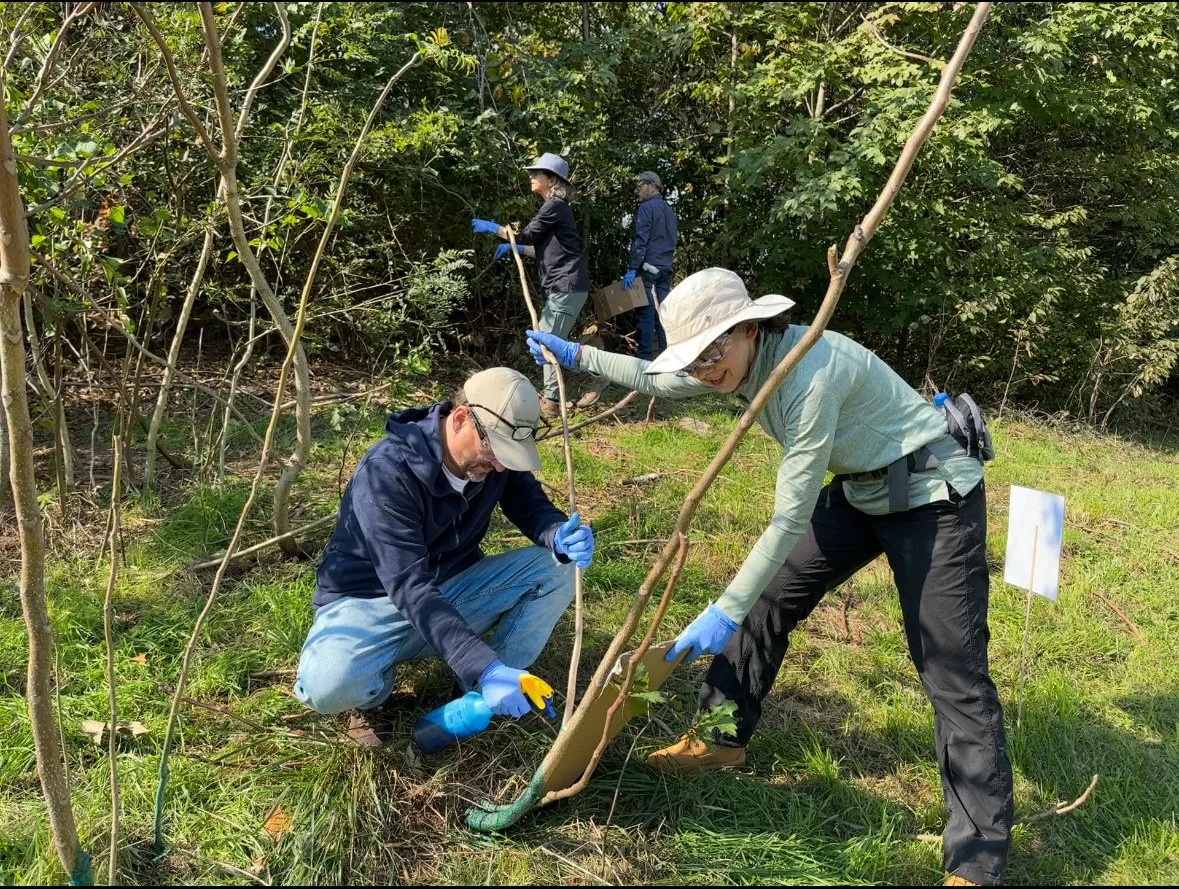
LIRA members learning basal bark method on tree-of-heaven with Blue Ridge PRISM.
Looking ahead, LIRA anticipates that five years of the grant program will raise public awareness from perhaps one in twenty Loudoun residents recognizing invasive plants to as many as one in two. At that point, the grant program may no longer be necessary. The expected outcome: the end of invasive plant sales in the County, a strong volunteer workforce removing invasive plants in communities and on private properties, and a proven national model demonstrating how local government and engaged residents can partner to tackle the invasive plant species crisis. 🌱