
Forest Lakes encompasses over 800 acres and 1,500 homes, with common areas, lakes, and miles of paths spread throughout. Retaining the beauty of these areas is paramount, not only to continue to allow native wildlife to flourish but also retain home values.
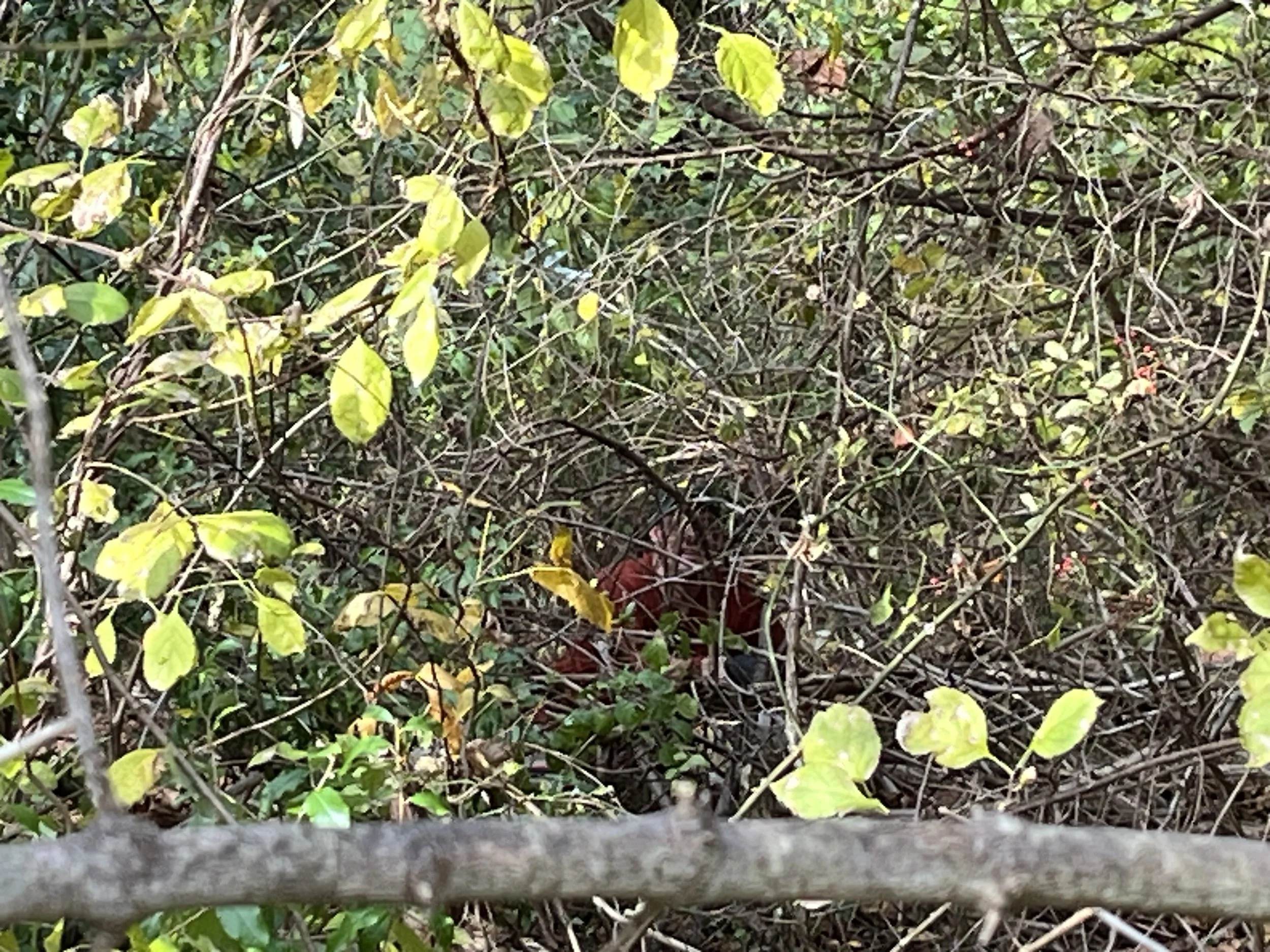
Invasive Asiatic bittersweet vines in Forest Lakes.
History
Organized efforts to control invasive plants within the Forest Lakes community in Albemarle County began in January 2025. That’s when long-time resident John Oliver solicited volunteers (via the community’s newsletter) to join him in managing invasives. John became interested in invasives a few years earlier when he noticed the spread of Autumn Olive plants and the proliferation of vines threatening trees throughout the area. He educated himself primarily via the Blue Ridge PRISM site and had been cutting vines, but realized that a larger group effort would be needed to get ahead of and minimize harm to our beautiful wooded common areas.
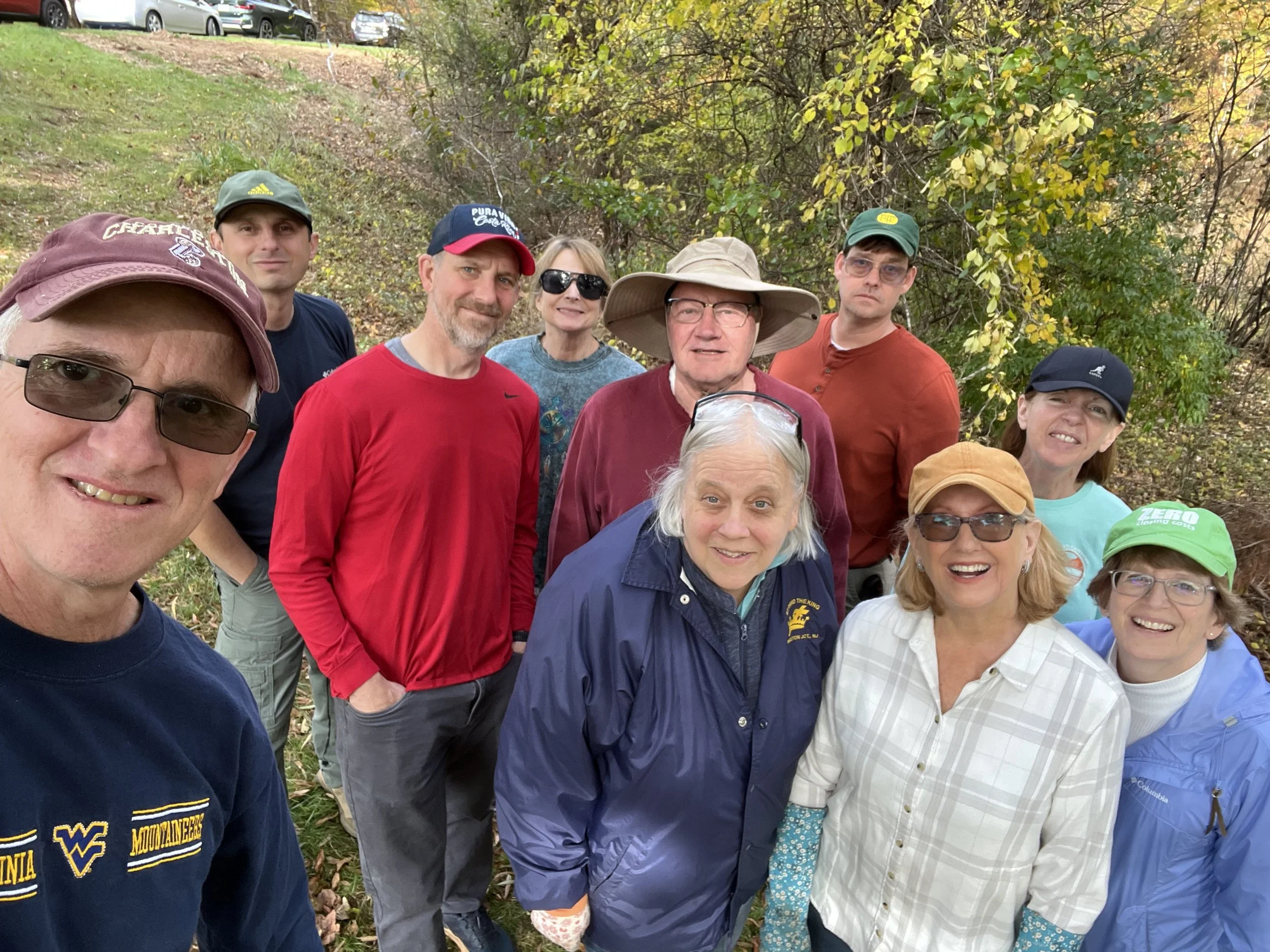
Forest Lakes Invasive Plant (FLIP) volunteers gather regularly to remove invasives.
An Ecological Challenge
The Forest Lakes Invasive Plant (FLIP) group started workdays in January 2025 with a handful of volunteers focused on threats to the tree canopy. As word spread over the spring and summer, the group grew to over 35 residents. Blue Ridge PRISM has been instrumental in our efforts. Their site is an invaluable source of guidance. Invasive Management Specialist Jacob Edel performed a site visit in Forest Lakes in May and provided reports to guide our work and Executive Director Lauren Taylor provided an informational session to residents, further increasing awareness.
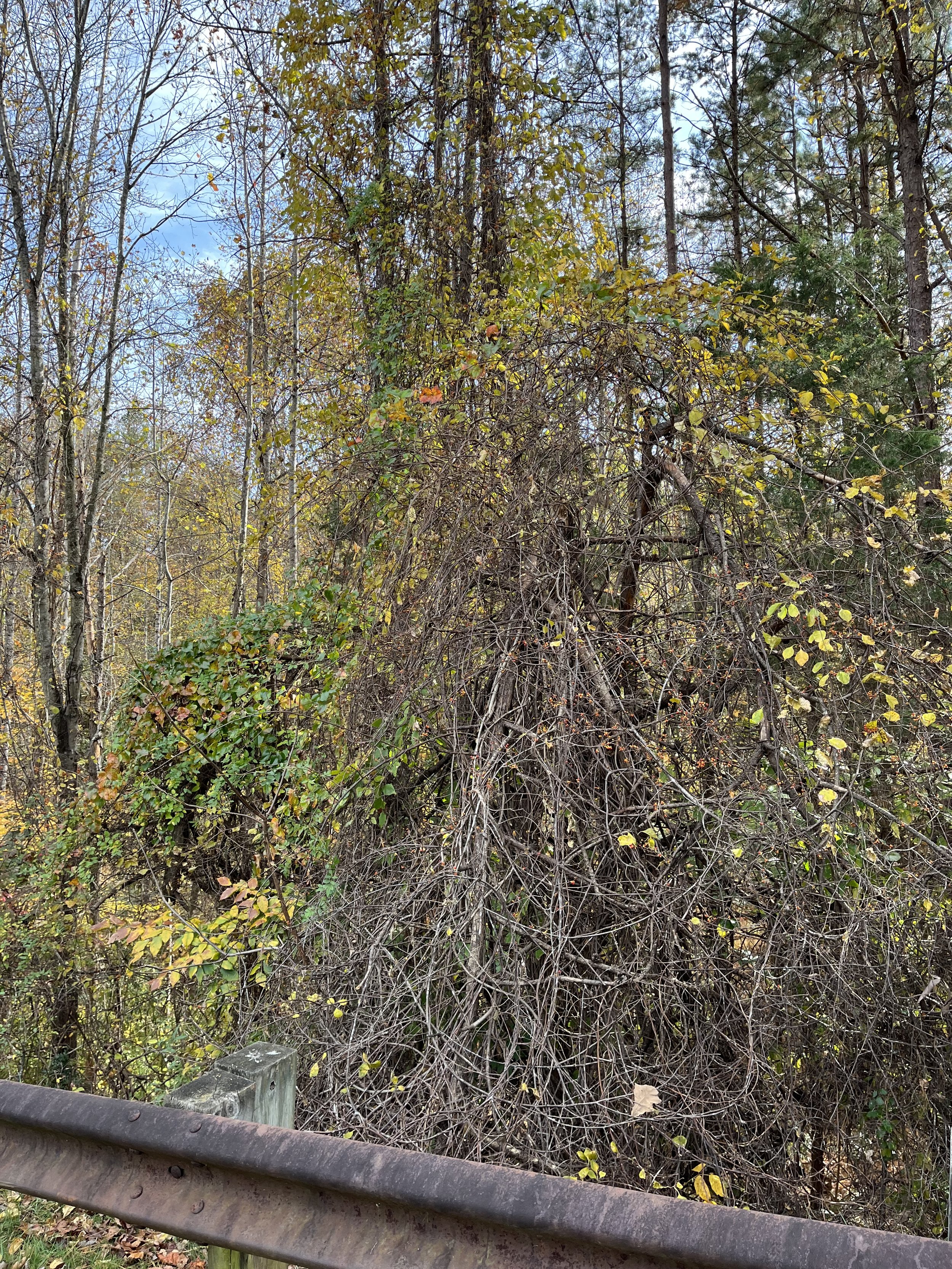
Dense invasive vines threaten the tree canopy.
Taking Control
Communication and cooperation with the HOA have also been key. The HOA now recognizes the importance of our invasive plant control efforts and has contributed in several ways, including the removal of a massive grove of Autumn Olive bushes, eliminating a huge seed bank that had been contributing to the proliferation of plants.
On one workday alone, the team removed over 50 autumn olive shrubs (some several inches in diameter) and treated over 100 oriental bittersweet vines!
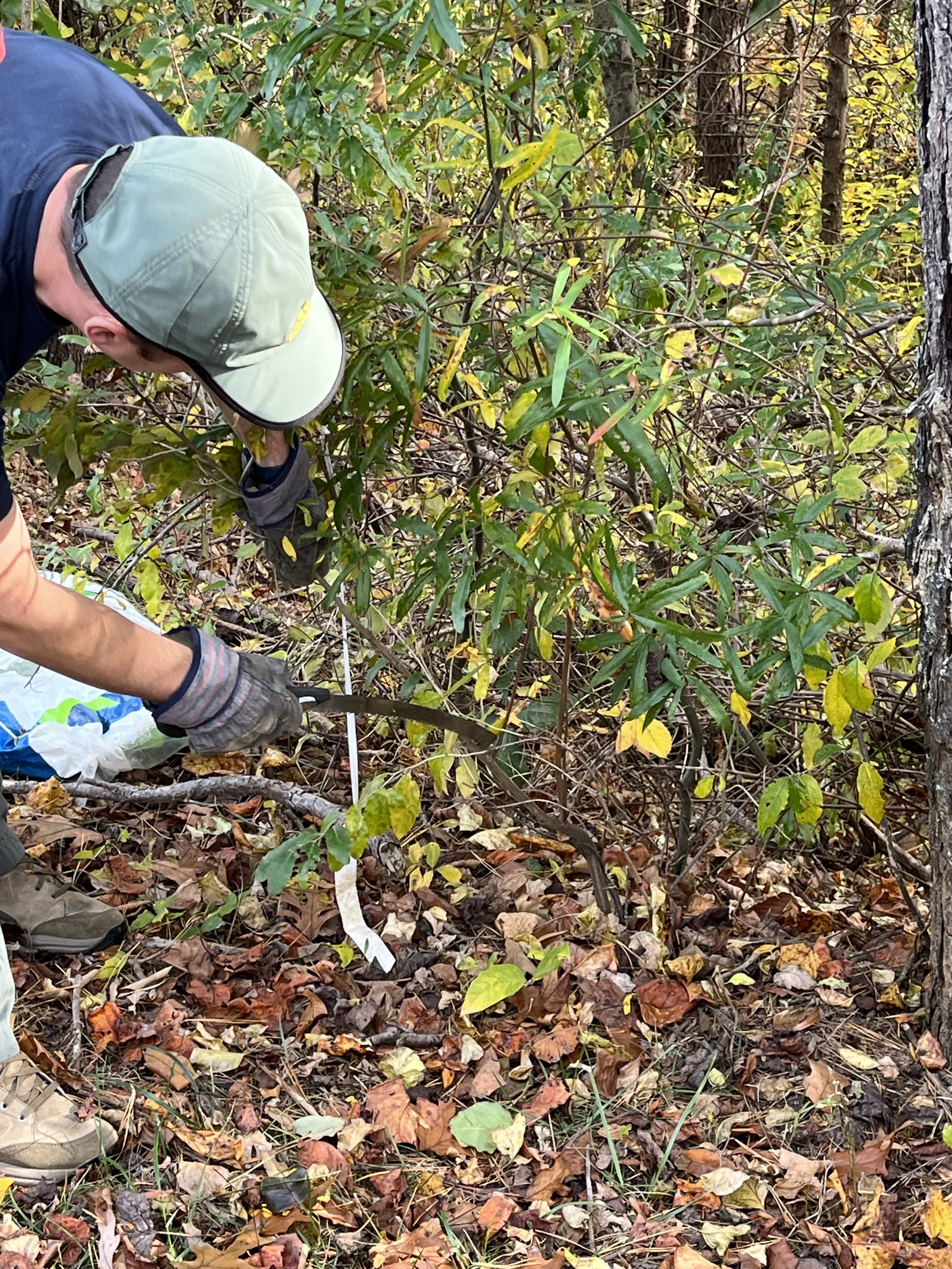
A FLIP volunteer removes an invasive autumn olive shrub.
Education of homeowners has also been a focus area, as most have no awareness of the imminent threat that invasives pose. We have continued education and awareness efforts with monthly newsletter articles, including an “invasive of the month.” Taking a page from the Glenmore community’s efforts, we also put together yard signs to “advertise” our workdays and encourage additional participation.
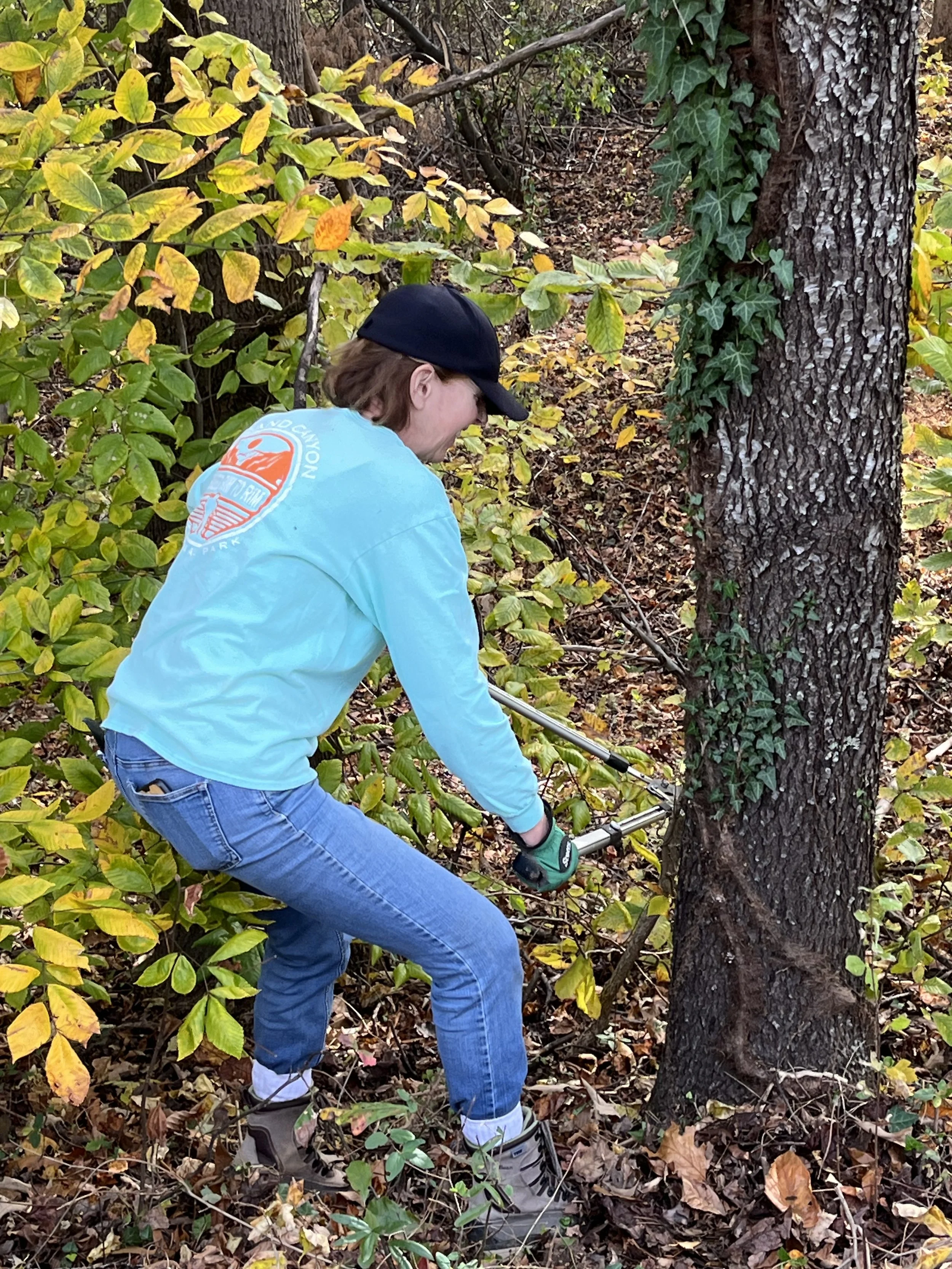
Rescuing trees from invasive English ivy vines is easy and rewarding.
Given the expansive and interspersed common areas involved, we used GIS to delineate “stewardship areas,” assigning leads to monitor those areas and organize group efforts. Most of our workdays are in late fall and winter, when plants are easier to access and poison ivy has died back. But we also have several residents who perform solo work throughout the year.
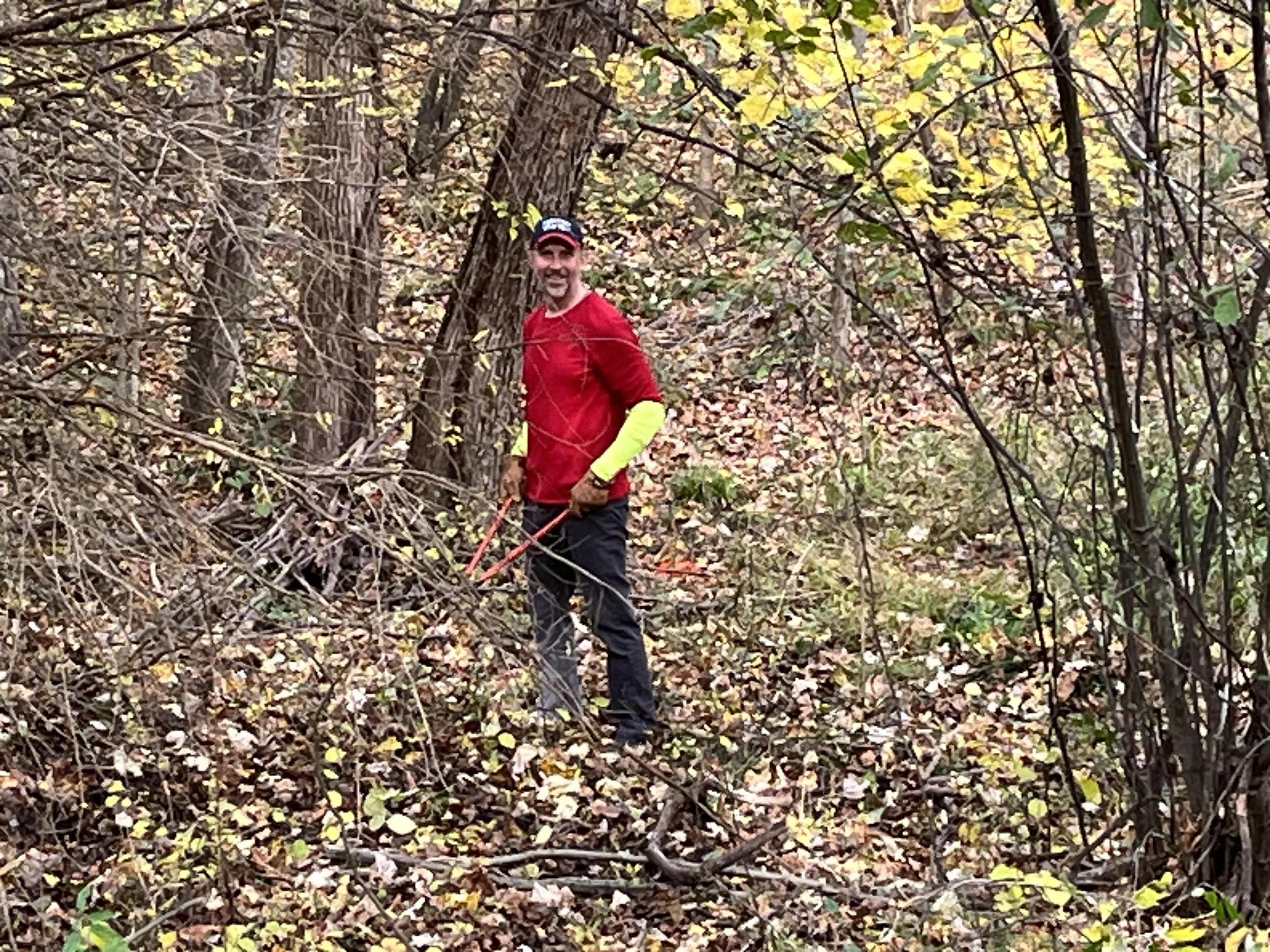
This is what progress looks like!
Our focus is on getting ahead of the major invasives, including vine threats to the tree canopy (Oriental Bittersweet) and the proliferation of Autumn Olive. But we also tackle other threats as we are able, address residents’ questions, and identify landscaping plants that are invasive.
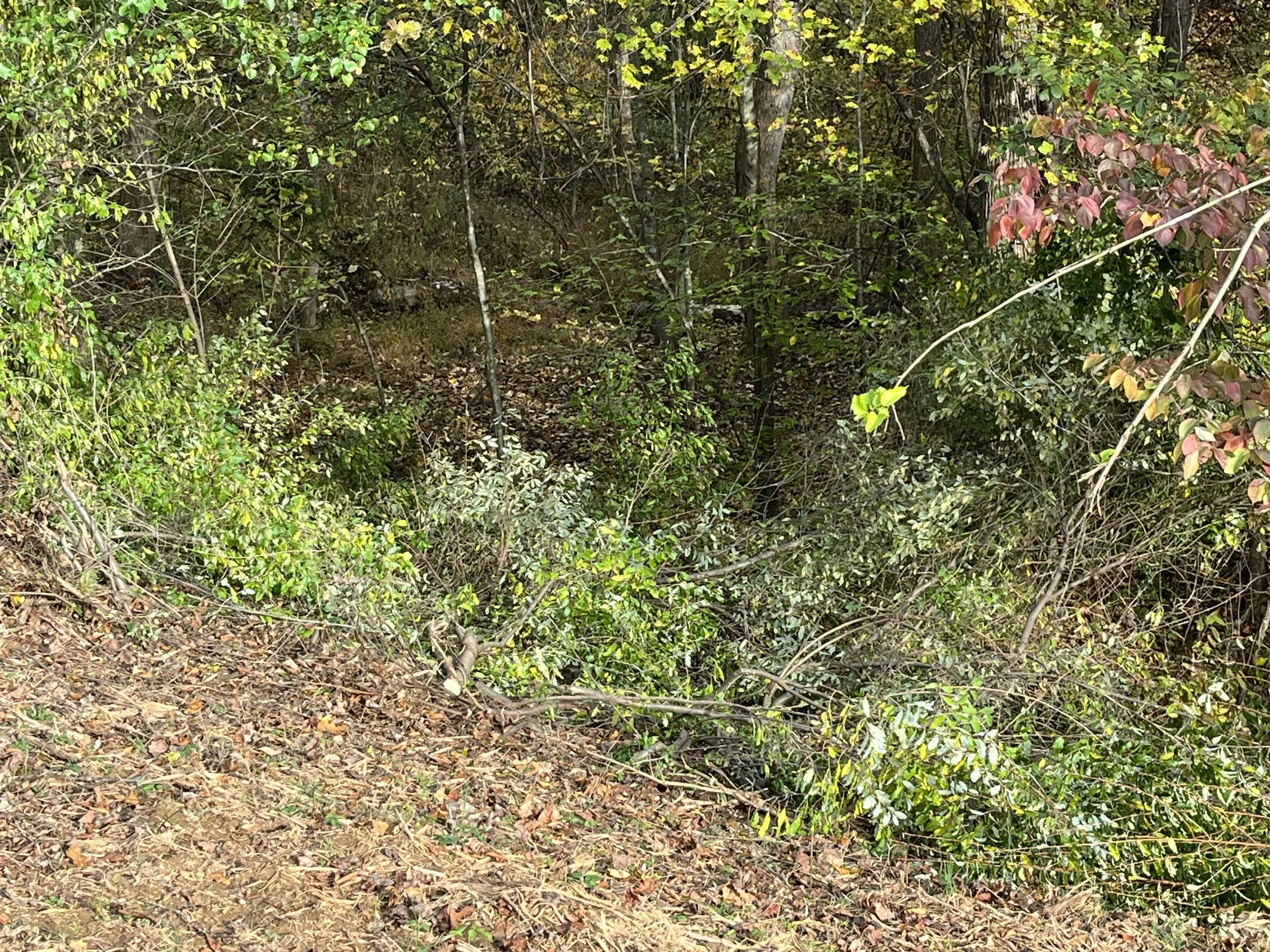
Freeing the forest from invasive autumn olive.
The challenges moving forward are significant and include further resident awareness, the increasing rate at which invasives are proliferating and encroaching upon Forest Lakes, and funding for contractor efforts and supplies. However, we are optimistic and encouraged by what we’ve already achieved in such a short period of time. 🌱